
Long before Ubud became known as a global destination for art, wellness, and cultural escape, its identity had already been shaped by generations of artists whose works quietly blended into everyday Balinese life. Among those artistic legacies is the distinctive Cemul sculpture style, a form of stone carving created by the late I Wayan Cemul, one of Bali’s most recognized sculptors known for his expressive and unconventional artistic character. His works became widely admired for their raw emotion, playful imagination, and deeply human presence that stood apart from traditional Balinese stone carvings.
At Puri Wulandari, the spirit of Cemul’s artistry has quietly lived since the resort first opened its doors in 2000. More than simply decorative elements, the statues have become part of the soul of the property itself. Guests may first notice them standing gracefully at the entrance, welcoming every arrival with silent expressions carved from stone. Further along the vast driveway surrounded by rice fields, more sculptures appear naturally between the landscape, almost as if they have always belonged there. From villa entrances to the restaurant, lobby, bar, and spa, the presence of these statues creates a continuous artistic journey throughout the resort.
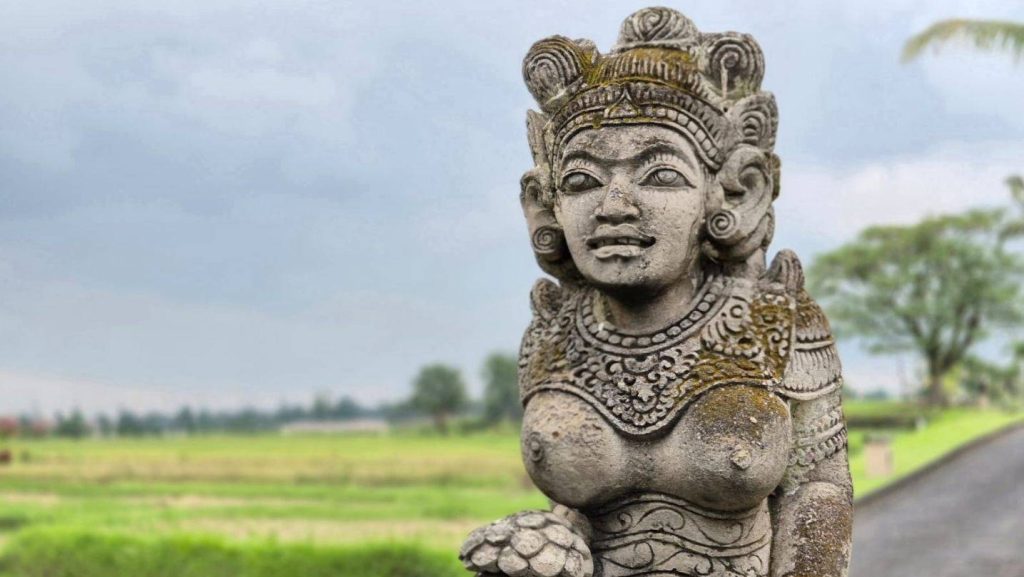
The uniqueness of the Cemul style lies not in perfection, but in expression. Unlike highly symmetrical classical carvings, Cemul sculptures carry a more personal and imaginative character. Their faces, gestures, and textures feel alive, reflecting the patience and artistic freedom of the sculptor during the creation process. Every curve carved into the stone tells a story of intuition, dedication, and emotion. It is this imperfect beauty that continues to captivate art lovers and travelers visiting Ubud today.
Most of the sculptures at Puri Wulandari are crafted using paras, a natural Balinese stone formed from hardened sediment over long periods of time. Some pieces also incorporate river stones, adding texture and individuality to each creation. Over the years, the tropical climate of Ubud has slowly transformed the surfaces with natural moss and weathered textures, allowing the sculptures to age beautifully alongside the surrounding jungle and rice terraces. Rather than appearing newly polished, they feel deeply rooted in the landscape, becoming one with nature itself.
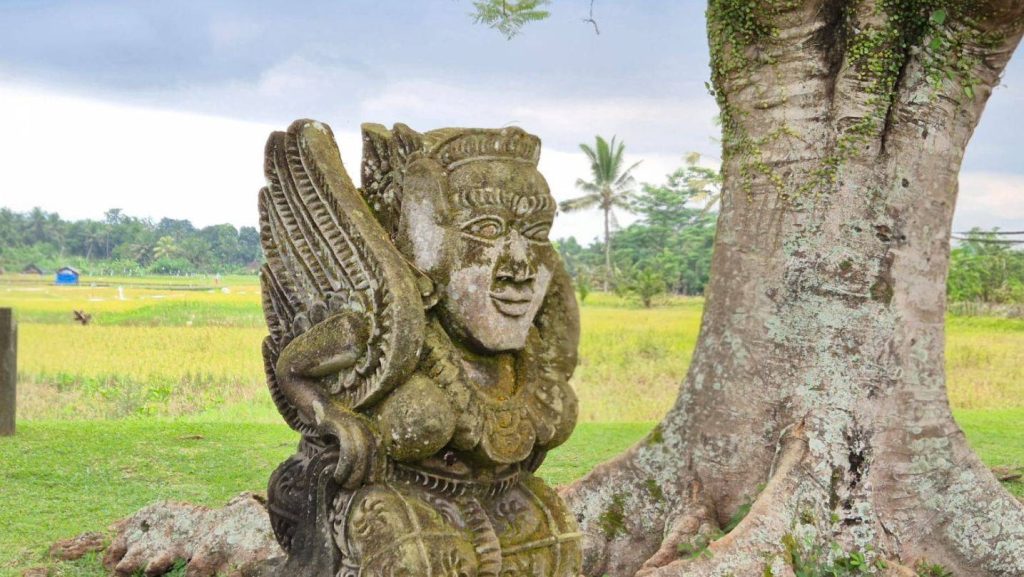
The artistic atmosphere surrounding Ubud has long been influenced by local sculptors, painters, and craftsmen who transformed the area into Bali’s cultural heart. () Cemul’s work became part of that evolution, introducing a sculptural language that felt both primitive and modern at the same time. His creations later appeared in various luxury resorts and private residences across Bali, admired for their ability to bring warmth, personality, and artistic identity into architectural spaces. ()
At Puri Wulandari, these statues do more than decorate the resort. They quietly preserve a piece of Ubud’s artistic history. Guests may pass them while walking toward their villa, dining beside the valley, or entering the spa without immediately realizing the cultural significance behind them. Yet subconsciously, the sculptures shape the atmosphere of the experience itself. They create moments of curiosity, stillness, and reflection that feel deeply connected to Bali’s artistic heritage.
In many ways, the Cemul statues embody what makes Ubud timeless. They are expressive without needing explanation, rooted in tradition yet filled with imagination, and beautifully imperfect in a way that feels profoundly human. Surrounded by nature and integrated into the architecture of Puri Wulandari, they continue to stand quietly as living symbols of Balinese artistry, patience, and creative spirit.